Journal › Newsroom › The Split Authority of Cue Sports: Who Writes the Rules and Who Runs the Tours
NewsroomThe Split Authority of Cue Sports: Who Writes the Rules and Who Runs the Tours
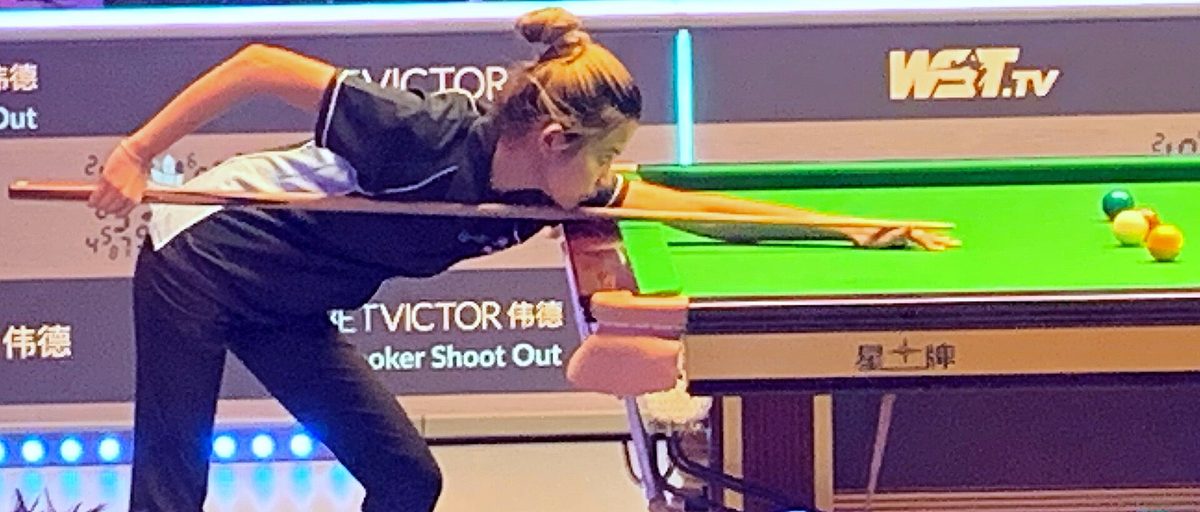
The World Professional Billiards and Snooker Association, founded in 1968, took over as the controlling body for professional snooker and billiards from the Billiards and Snooker Control Council. It publishes and refines the official rules for both disciplines. It handles refereeing standards worldwide, runs coaching programmes, and maintains the ranking list that determines who qualifies for what. When Jason Ferguson speaks as chairman of the WPBSA Board, he is speaking for the sport's governing authority, not for the company that books the venues and sells the broadcast rights.
That company is World Snooker Limited. The WPBSA owns 26 per cent of it. World Snooker Limited operates the World Snooker Tour under exclusive right granted by the WPBSA. The tour is, in the WPBSA's own framing, the "visible" circuit: the events with prize money, television cameras, and the names casual fans recognize. The WPBSA remains the governing body behind it, responsible for development, equality initiatives, and grassroots participation. A player competes on the WST circuit, rises or falls on the WPBSA ranking list, and answers to the WPBSA for disciplinary matters. The separation is institutional, not cosmetic.
What "Governance" Actually Means in Practice
The WPBSA's published responsibilities break down into categories that reveal how thin the line between sport and business can be. It owns the rule book. It trains and certifies referees through partnerships with national and regional federations. It runs coaching programmes and sets standards for who may coach at what level. It administers the ranking system that feeds directly into WST event qualification. It handles equality and diversity policy.
The WST, meanwhile, is described in WPBSA materials as a "commercial events company." It holds the exclusive right to own and operate the tour. The prize funds, the venue contracts, the broadcast agreements: these sit with World Snooker Limited. The WPBSA's 26 per cent stake gives it a voice, not control. This is the model that has become standard across professional cue sports: governing bodies retain the sport's integrity while licensing its commercial exploitation to separate entities.
The practical effect for a professional player is layered. Their contractual relationship is with the tour operator. Their eligibility to enter events depends on the governing body's ranking list. Their conduct at the table is judged by officials trained and certified to WPBSA standards. If they dispute a ruling, the appeals structure runs through the governing body, not the commercial company that employed the referee.
The Amateur Side: A Deliberately Quiet Border
The WPBSA's remit is explicitly professional. What sits beneath it — the amateur structure through which most players enter the sport — is less clearly documented in available sources. The World Snooker Federation exists as a recognized body in amateur snooker, but its precise relationship to the WPBSA, its constitutional authority, and the mechanics by which amateur players transition to professional status are not verified in primary materials reviewed here.
This gap matters for understanding how a player from Canada, or any non-traditional snooker nation, might progress. The WPBSA runs Q School, the qualification tournaments for tour places. It also works with "national and regional federations" on development. Whether those federations are formally subordinate to the WSF, parallel to it, or simply recognized partners for specific programmes is not stated in available documentation. The prudent reading is that amateur snooker operates under a separate structure that coordinates with, rather than reports to, the professional governing body.
Pool: A Different Architecture Altogether
Pool sits under a different hierarchy, though its full shape is harder to trace. The Canadian Billiards Association states that it is affiliated with the World Pool-Billiard Association through the Billiard Congress of America, described there as the WPA's North American affiliate. This places Canadian pool players in a chain: their national body, the continental affiliate (BCA), and the global authority (WPA).
Above the individual disciplines sits the World Confederation of Billiard Sports, which represents pool, snooker and carom together in front of the Olympic movement. What it does not do is write anyone else’s rules: the pool federation, the snooker association and the carom union each keep that to themselves. A player looking for the rule that governs their own match therefore looks to the discipline, not to the confederation above it.
What is clear is that pool and snooker are administered separately. A player holding a WPBSA ranking has no standing in WPA events unless they separately qualify. The rules differ. The refereeing certifications differ. The commercial tours are entirely distinct operations. The WCBS provides a nominal umbrella, but for practical purposes, a pool player and a snooker player inhabit parallel administrative worlds.
Where Canadian Players Stand
The Canadian Billiards Association describes itself as "the governing body of cue sports for Canada, recognized by Sport Canada, and a registered not-for-profit corporation with Industry Canada." It claims affiliation with the WPA through the BCA. It references the WCBS as the body working toward Olympic recognition.
Several elements of this description resist clean verification. Whether "Canadian Billiards Association" is the current legal name, a trading name, or a legacy label is unclear from available sources. The precise terms of its recognition by Sport Canada have not been confirmed through independent primary documentation such as federal registry filings or Sport Canada's own published lists of recognized national sport organizations. The affiliation chain to the WPA — stated as fact by the CBA — has not been independently confirmed through WPA or BCA sources.
What can be stated is the structure the CBA claims: a national body, continental affiliation through the BCA, and global connection through the WPA and WCBS. For a Canadian player, this means their competitive pathway to international pool events runs through CBA qualification to WPA-sanctioned tournaments. Their pathway in snooker or English billiards runs separately, through whatever arrangement the WPBSA maintains with Canadian representatives. Whether that representative is the same CBA acting in a different capacity, or a separate entity, is not established in available materials.
The Discipline-by-Discipline Map
Snooker and English billiards: WPBSA governs. World Snooker Limited (WST) operates the professional tour under license. The WPBSA retains rules, rankings, refereeing, coaching, and development. A 26 per cent stake in WST gives the governing body influence without operational control.
Pool: WPA governs globally, with continental affiliates (BCA for North America). The WCBS coordinates across cue-sport disciplines for Olympic purposes. Commercial tours operate under license from the WPA or its affiliates, though specific tour operators are not named in available sources.
Carom (three-cushion billiards): The UMB — Union Mondiale de Billard — governs this discipline. Its relationship to the WCBS and to WPA-sanctioned pool is coordinating rather than hierarchical. Players specialize; there is no meaningful crossover in governance.
Russian pyramid: No verified governing body was located in available sources. It operates as a distinct discipline with its own rules and championship structure.
Amateur structures: Separate from professional governance in all disciplines, with transitional mechanisms (Q School in snooker, unspecified in pool) that are not fully documented in primary materials.
Reading a Results Page
When a headline announces a "WPA World Championship," the title belongs to the World Pool-Billiard Association. When it announces a "World Snooker Tour" event, the operator is World Snooker Limited, running under WPBSA license. When it cites a "WPBSA" ranking change, that is the governing body's own data. The Canadian Billiards Association claims to sit in both chains — through the BCA to the WPA for pool, and through unspecified arrangements for snooker — but the precise legal status of that claim awaits confirmation from Sport Canada or from independently filed corporate records.
The WPBSA governs. The WST sells tickets. The CBA says it connects Canadian players to both. The reader now knows which acronym means what, and where the questions remain.