Journal › The Cue Rack › Pool Cue Tip Hardness: What the Trade-Off Actually Costs You
The Cue RackPool Cue Tip Hardness: What the Trade-Off Actually Costs You
What hardness changes at impact
When the cue tip strikes the ball, the leather deforms. Softer tips compress more deeply, increasing what shop guides call "dwell time"—the brief moment of contact between tip and ball. That longer contact is said to increase friction and spin generation, giving players more draw or follow on demand. Harder tips deform less, transferring energy more directly but with less of that gripping, embedding sensation that soft-tip players describe as "control."
The evidence for these claims comes almost entirely from retailer guidance and player experience, not from laboratory measurement. Some guides note that softer tips increase dwell time and friction, but adds that excessive softness invites mushrooming, faster flattening, and inconsistent cue-ball deflection. The trade-off is clear in the advice, even if the physics remain largely unmeasured in the sources found.
What is measurable, at least in shop practice, is how quickly a tip loses its shape. Soft tips spread outward over the ferrule—a process called mushrooming—quickly. Hard tips resist this spreading, maintaining their radius longer. The deformation that supposedly helps spin becomes a liability for geometry.
Spin, chalk, and the price of softness
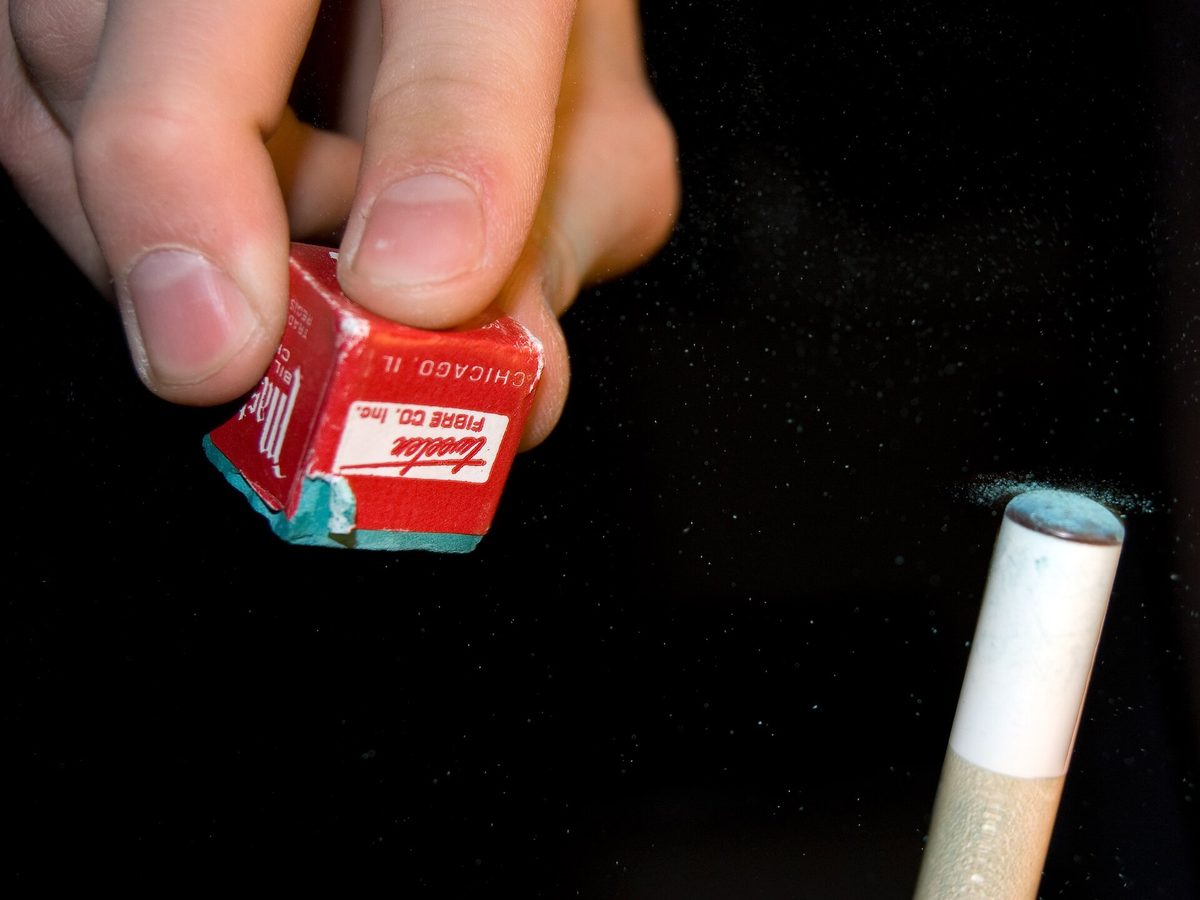
Soft tips are said to grip chalk better because their porous, compressible surface accepts more particles and holds them under pressure. When that surface glazes smooth from repeated impacts, chalk retention drops and miscues follow. The fix is scuffing: roughing the tip surface to restore tooth. Some maintenance guides suggest scuffing a soft tip every few games; others advise every two to three sessions, or simply when chalk stops biting. The variation in advice suggests how much depends on individual tip quality, humidity, and how hard a player hits.
The real cost of softness emerges in shape retention. Mushrooming happens faster. Flattening happens faster. The tip that gripped so well last week may now be spreading onto the ferrule, changing its effective diameter and altering every shot. Burnishing—rubbing the sides of the tip to compress and seal the leather—helps slow this process, but it adds another step to maintenance. Soft tips demand attention as a condition of their performance.
Excessive softness, one guide warns, brings mushrooming, faster flattening, and inconsistent cue-ball deflection. The player gains spin potential but loses geometric stability. The tip becomes a moving target, its changing shape introducing variables that no amount of chalk can fix.
Layered vs single-layer
Layered tips—built from multiple thin sheets of leather rather than a single piece of pigskin—are described in shop guidance as lasting longer than single-layer tips at the same hardness. They wear more evenly and hold their shape better through repeated impacts. For players who want some of the benefits of soft-tip grip without the rapid degradation, layered construction offers a middle path.
The construction brings its own maintenance pattern. Hard and layered tips can develop a polished glaze that chalk will not grip. Where soft tips might need gentle scuffing, layered or harder tips often demand more aggressive treatment—a sharp scuffing or even a tip pick to open the surface. The maintenance is less frequent but more intensive when it comes.
What remains unverified in the sources found is any measured difference in spin or control between layered and solid pigskin tips. Shop guidance treats layered tips as more durable, but the performance claims rest on construction logic rather than experimental data. Players report differences, but those reports have not been isolated from the placebo effects of price and reputation.
Phenolic belongs on break and jump cues
Phenolic tips sit at the extreme end of the hardness spectrum. They are described as appropriate for break and jump cues because they last significantly longer than ordinary leather and transfer maximum energy into the rack or the jump stroke. The surface does not compress; it strikes and rebounds.
Whether phenolic tips are permitted in competition depends on the governing body and the event. Governing bodies maintain their own equipment rules, and these specific regulations were not verified in the sources found. A player considering a phenolic tip for competition play should consult the actual rulebook for their circuit, not rely on retail guidance. The material found describes phenolic as harder and longer-lasting, but does not settle the regulatory question.
How players maintain shape
The geometry of a cue tip is described in the language of American coins. A nickel radius—a larger radius—is framed in shop guidance as more spin-oriented. A dime radius—a smaller radius—is described as offering more control. These conventions appear in retailer advice without clear attribution to any governing body's technical standard. They are practical shorthand, not certified specifications.
Maintenance follows a rhythm that depends on tip hardness and play frequency. Scuffing restores chalk retention when the surface glazes. Some guides suggest every few games for soft tips; others stretch this to every two or three sessions. Burnishing the sides compresses the leather and resists mushrooming. When the tip wears down to about 6 to 7 mm in height, or when mushrooming spreads beyond what reshaping can correct, replacement becomes necessary. A tip that cannot hold its geometry cannot hold its performance, regardless of how recently it was scuffed.
What the trade says about hardness
The cue-tip trade cites a hardness scale, though the sources found do not trace this to a standards body. One buying guide describes Shore D measurements, placing softer tips at about 55 to 62 and a more balanced range at 64 to 68. These figures appear in retail guidance, not in published technical standards documents. They are shop language, useful for comparison within a manufacturer's line but not necessarily consistent across brands or batches.
The lack of standardized measurement matters because "soft" and "hard" vary by maker. One company's medium may approximate another's hard. The Shore D references give players a number to request, but the number's authority is borrowed from industrial testing contexts where conditions are controlled—conditions that do not obtain in a pool hall.
What the trade guidance makes clear is that hardness is inseparable from maintenance commitment. Soft tips compress more, grip better, and fail faster. Hard and layered tips hold shape longer but can glaze into unpredictability. The Shore D scale, whatever its actual precision, merely quantifies a choice that players make in practice every time they decide whether to scuff now or scuff later, whether the mushrooming has gone too far, whether this tip has one more session or needs replacement tonight.