Journal › The Cue Rack › The 19 Oz Myth: Why Your First Cue Shouldn't Start With a Number
The Cue RackThe 19 Oz Myth: Why Your First Cue Shouldn't Start With a Number
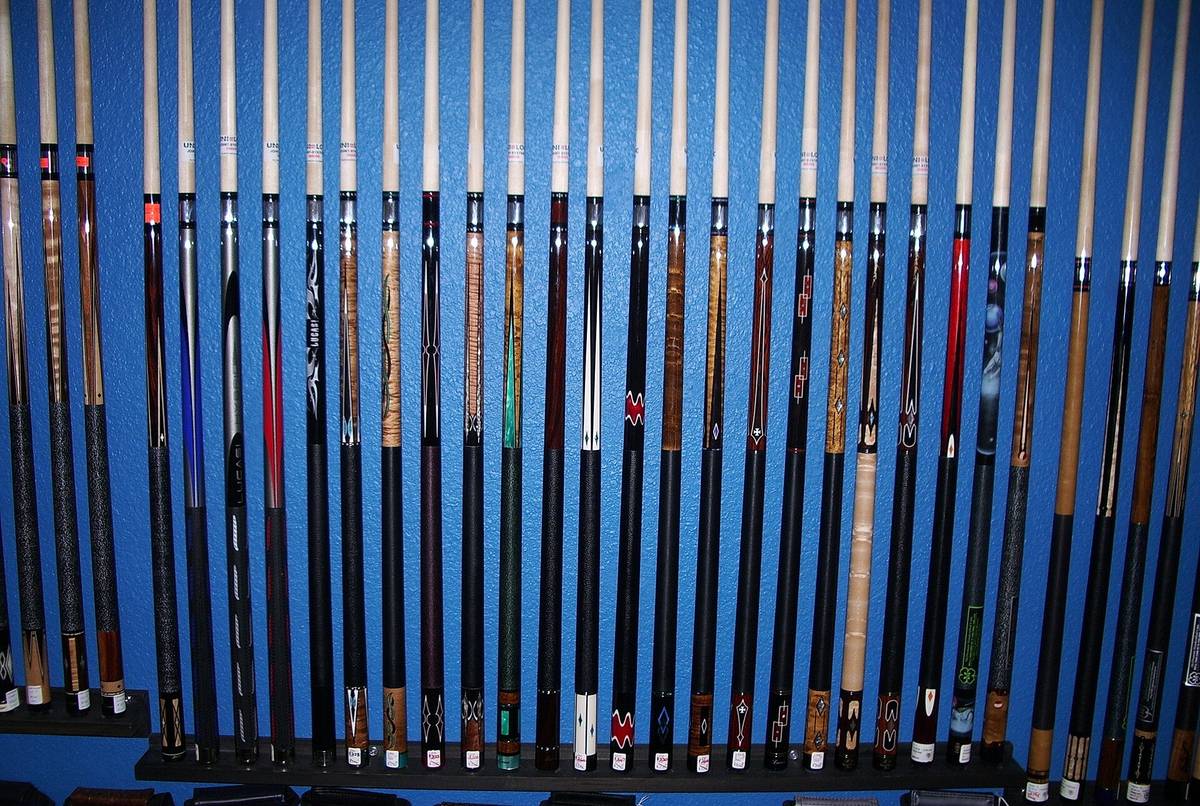
What cue weights actually exist
Manufacturers cast a surprisingly narrow net. For standard playing cues, 17 to 21 ounces covers virtually every option stocked by major retailers. Within that band, 18 to 20 oz captures the overwhelming majority of serious players, with 19 oz serving as the practical middle ground that cue makers produce in volume.
The market splits into three distinct categories with little overlap. Playing cues cluster in that 17–21 oz range. Break cues run heavier, commonly 20 to 21 oz, built to drive through the rack rather than stroke with finesse. Jump cues occupy the opposite pole: Jump cues typically weigh 8.5 to 13 oz, with some sources narrowing that to 11–14 oz. These shorter, stiffer sticks prioritize quick elevation and minimal deflection over momentum.
The gap between a 21 oz break cue and a 13 oz jump cue is nearly double the entire playing-cue spectrum. That separation exists for mechanical reasons. Breaking demands transferring maximum energy into the rack; jumping demands maneuvering the cue ball over obstructing balls with a steep trajectory. Neither task tolerates the compromise weight of a standard playing cue.
Why the same ounce count can feel different
Pick up two 19 oz cues from different makers and you may swear one is lighter. The balance point explains why. Defined as the centre of gravity—the spot where a cue rests horizontally on a single support without tipping—the balance point typically sits 16 to 18 inches from the butt end on production cues, though the range runs wider, 17 to 22 inches, on standard 58-inch two-piece sticks.
That variation matters immediately. A 19 oz cue with a forward balance point (closer to the joint) carries more mass in your bridge hand and less in your grip. The same weight distributed rearward loads your back hand and lightens the front. Two cues of the same 19 oz can feel entirely different if their balance points differ.
The balance point emerges from every component: shaft density, joint hardware mass, butt material, wrap weight, and any user-installed modifications. A dense maple shaft versus a lighter maple-laminate shaft shifts the centre forward. Stainless steel joints versus brass changes the midsection heft. The reading on a postal scale captures none of this.
What weight bolts really change
Most modern cues accept weight bolts installed at the rear of the butt, near the base. These systems typically adjust total weight between 17.5 and 21.5 oz in 0.5 oz increments—small steps that nonetheless alter both total mass and balance geometry.
Adding a bolt increases overall weight and, because the mass sits behind the existing centre of gravity, pulls the balance point slightly rearward. Removing weight does the reverse: total mass drops and the balance point creeps forward toward the joint. A player chasing "heavier" by installing bolts may unintentionally create a cue that feels stubbier, slower to pivot, and more tiring across long sessions despite the same ounce reading on paper.
The bolt system's location at the butt end limits how much it can correct for a forward-biased cue. You can add rear mass, but you cannot redistribute weight already fixed in the shaft or joint. This constraint frustrates buyers who expect weight bolts to fine-tune feel without consequence.
Why break and jump cues are weighted differently
The specialized cue categories exist because generic playing cues fail at extremes. A 19 oz stick can break adequately, but dedicated break cues at 20–21 oz deliver more consistent rail spread by carrying additional momentum through the stroke. The tradeoff is reduced finesse; these cues feel club-like on delicate shots.
Jump cues invert the logic. At 8.5–13 oz, they sacrifice momentum for the rapid acceleration and steep angle needed to pop the cue ball over a cluster. The stiffness that aids jumping would deaden feel on normal shots. Players who try to break with a jump cue or jump with a break cue discover the weight categories exist for functional reasons, not marketing segmentation.
This specialization reveals the inadequacy of seeking one "correct" cue weight. A player buying their first personal cue faces incompatible demands: the power geometry of breaking, the precision of position play, and the occasional jump. The 19 oz middle ground handles none of these tasks optimally, only acceptably.
What cannot be reduced to one number
The recurring advice from retailers—try several weights—lacks the formal sourcing one might want, but the physics supports it. Mass, balance point, and stroke speed interact in ways no specification sheet captures. A player with a compact, accelerated stroke may prefer forward balance and moderate weight. A player with a long, fluid stroke may tolerate rear-biased heft. Neither preference correlates directly with skill level or body size in the available data.
The verification gaps are telling. Weight is not where the rulebook spends its attention: within ordinary limits, what a cue weighs is a matter of preference rather than of legality. No physics quantification specifies exactly how much additional momentum a heavier cue transfers versus a lighter one at identical stroke speeds. Industry standards for weight bolt increments exist only at the generic 0.5 oz level, with no authoritative mapping to specific cue models. These absences matter because they expose how much of cue selection remains empirical rather than codified.
What can be stated: the balance point shifts perception more than raw weight. Two cues with identical scale readings and different balance geometries will produce different bridge-hand pressure, different pivot resistance, and different fatigue patterns across a three-hour session. The player who tests only by hefting cues in the shop, without addressing the table, misses this entirely.
Rules and limits
Governing bodies have remarkably little to say about cue weight. The search surfaced no primary WPA or BCA rule text establishing maximum or minimum weights for tournament play. The 17–21 oz playing cue range and the 19 oz market dominance appear to be commercial conventions, not regulatory requirements. This absence means buyers cannot fall back on official guidance; the market offers variety without standardization, and the responsibility for selection falls entirely on the player.
Without verified limits, the practical boundaries become mechanical: a cue light enough to control and heavy enough to avoid being pushed around by the object ball's resistance. Those boundaries differ by stroke, by table conditions, and by the physiological quirks of individual players.
The 19 oz figure endures because it sits where most compromises land tolerably, not because it optimizes any particular skill. It is the Honda Civic of cue weights: available, familiar, and unobjectionable. But unobjectionable is not the same as suited. A player testing cues should hold the same weight with different balance points, and different weights with similar balance points, to learn which variable actually drives their comfort. The number on the sticker is merely where shopping starts.