Journal › Game Room › Shuffleboard Table Length Is a Room Math Problem Disguised as a Game Choice
Game RoomShuffleboard Table Length Is a Room Math Problem Disguised as a Game Choice
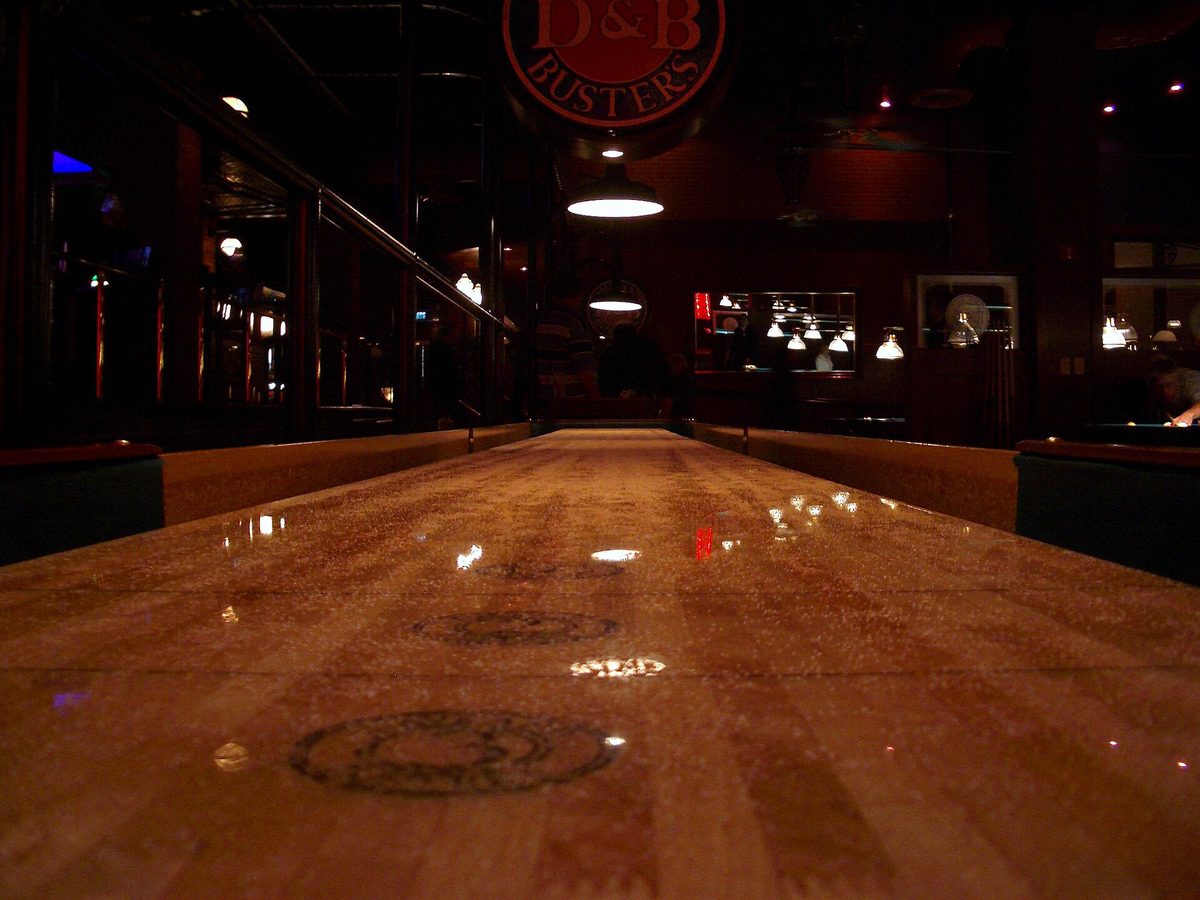
Shuffleboard tables are sold from 9 feet to 22 feet. The 22-foot length is described as regulation tournament size, a figure repeated across manufacturer and retail listings alike. For home use, 12 feet, 14 feet, and 16 feet dominate the market. One buyer's guide describes anything from 12 feet to 22 feet as the "true tournament-length bed," a phrasing that hints at how loosely the terminology travels even among sellers.
What Lengths Are Actually Sold
The range starts at 9 feet and extends to 22 feet. That 13-foot span covers everything from apartment-sized novelty tables to full competition equipment. Common home sizes cluster at 12, 14, and 16 feet, with shorter tables easier to find at lower price points and longer tables scaling up in cost and delivery complexity.
The 22-foot specification carries weight because it is the length most often called official. What "official" means in practice is harder to pin down. No primary rulebook or governing body stands behind the phrase, and it gets repeated from one retailer to the next without attribution. Buyers should treat "regulation" as a dimensional claim about length and width, not a guarantee of competitive sanction.
How Much Room Each Length Really Needs
Table length and room length are not the same number. Plan for 2 to 3 feet of clearance at each end, where players stand to shoot. A 12-foot table therefore needs roughly 16 to 18 feet of usable room length. A 22-foot table demands 26 to 28 feet. The cradle, the housing that surrounds the playfield, adds further to the footprint. Regulation tables run 22 feet long by 20 inches wide at the playing surface, with the cradle extending beyond those dimensions.
These figures are planning estimates, not structural requirements. A buyer with 17 feet of basement might squeeze a 14-foot table with minimal shooting space. Someone with 25 feet might find a 20-foot table leaves breathing room. The 2-to-3-foot rule functions as a comfort threshold; below it, players angle their bodies or shorten their strokes.
What the Surface Is Made to Do
The playfield is wood, and wood moves. Humidity swells it, dryness shrinks it, and over time the surface can lose the dead-flat plane the game requires. BilliardHome's shuffleboard overview describes tables built with climate adjusters underneath the playing surface, mechanical devices that let owners correct for expansion and contraction by tweaking tension across the span.
This matters because a crowned or dipped surface sends weights drifting unpredictably. The adjusters do not prevent warping; they provide a correction mechanism after humidity has done its work. The owner becomes the active manager of the table's geometry, not merely a spectator to it.
Maintenance Is Part of Ownership
Keeping a shuffleboard table playable demands scheduled attention, not occasional enthusiasm. Fresh wax before each session. Sweeping powder off after play. Re-siliconing the surface every few months. Holding the room at 45 to 55 percent relative humidity. Checking the board with a straightedge across its width at several points twice yearly, timed to the season changes when indoor humidity shifts most dramatically.
This is woodworking maintenance applied to recreation. The straightedge check reveals whether the climate adjusters need turning or whether humidity control has lapsed. Skip the wax and the pucks stick; skip the humidity control and the surface bows; skip the seasonal check and the bow becomes a habit the adjusters may not fully correct.
Why Length Changes the Game
Shorter tables compress everything. The 22-foot tournament length spreads scoring zones across distance that rewards power, finesse, and the angled bank shot. Shrink that to 12 or 14 feet and the same zones sit closer together, changing how players approach weights already in play. Some describe the 12-to-22-foot range as "true tournament-length," but the practical experience differs: shorter tables favor direct shooting over strategy, with less room to knock opponent weights off scoring positions.
Whether this constitutes impairment or simplification depends on the player. Casual household games rarely replicate tournament conditions anyway. The shorter table trades some tactical depth for fit and cost, a trade most buyers knowingly make.
The Ownership Tradeoff
The longer the table, the more room it commands, the more humidity it exposes across its span, and the closer it comes to the formal game as played in dedicated halls. The shorter table surrenders those qualities for access, fitting where 22 feet cannot and forgiving where climate control proves intermittent. Either way, the purchase commits the buyer to wood and weather, to wax and straightedges, to the small seasonal rituals that keep a long flat surface flat.