Journal › Cue Sports › Three-Cushion Billiards Rules: How to Score on a Table With No Pockets
Cue SportsThree-Cushion Billiards Rules: How to Score on a Table With No Pockets
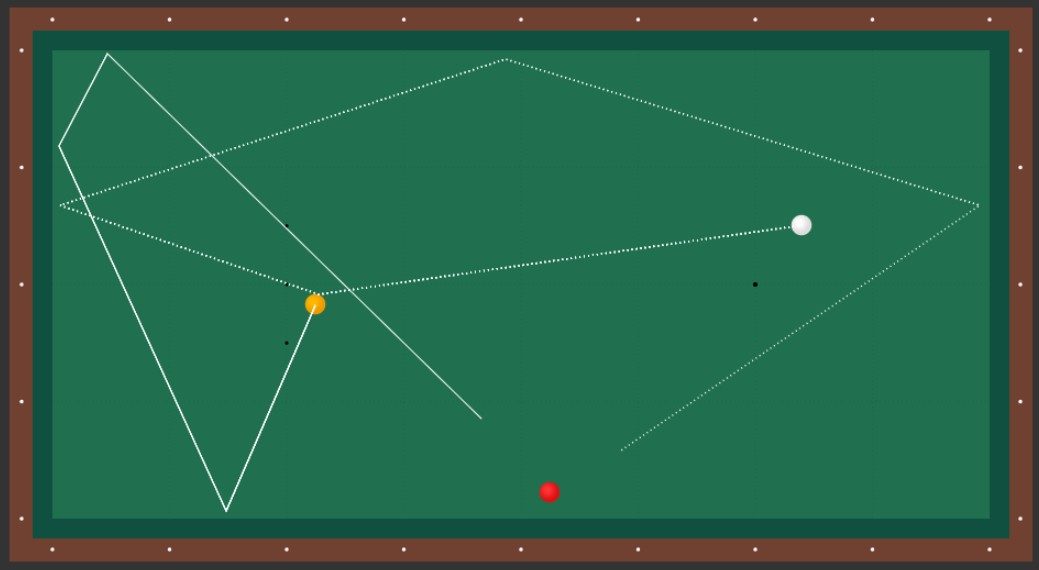
The Pocketless Table and Its Engineering
The game unfolds on a playing surface of 2.84 metres by 1.42 metres, with the Union Mondiale de Billiard permitting a tolerance of plus or minus five millimetres. Slate forms the bed, and tournament specifications demand a minimum thickness of 45 millimetres or alternative material approved by the UMB committee. Beneath the cloth, electrical heaters maintain temperature to eliminate humidity from the slate and ensure consistent ball roll. The United States Billiard Association describes the familiar imperial equivalent: a 5 foot by 10 foot table, pocketless, bounded only by cushions.
Three balls occupy this space. Two serve as cue balls—one white, one yellow—with the third ball red and designated strictly as an object ball. Players alternate turns. The striker chooses either white or yellow as their cue ball for that inning. What matters is the path, not the identity of the balls touched.
What Counts as a Point
The UMB rules state the requirement plainly: a count is valid only when the cue ball has touched both object balls and made three or more cushion impacts before striking the second object ball. Order matters critically. Contact the first object ball, ricochet off three cushions, then strike the second object ball—point. Strike two cushions, touch the first object ball, strike one more cushion, then the second object ball—point. Touch three cushions before either ball, then both object balls—no point, because the cushion impacts did not precede the second object ball contact.
This distinguishes three-cushion from its predecessors. In straight rail, a count demands only that the cue ball contact both object balls on a single stroke—no cushion requirement at all. Balkline introduced rectangular "balk spaces" marked by lines parallel to the rails, restricting where counts could be made. One-cushion, as codified by the United States Billiard Association, requires at least one cushion contact in addition to the two object balls. Each iteration added constraint to restore challenge as players mastered the previous standard.
The Difficulty Scale
The term circulates in coverage and commentary as the standard measure of form, and it is calculated the same way everywhere: successful counts divided by innings played. What it is not is a fixed benchmark. An average that impresses in one class of competition is ordinary in another, so the number says little until the level it was made at is named beside it. What separates professional play from amateur remains widely discussed but not formally documented in accessible UMB statistical releases.
This gap matters because three-cushion difficulty is quantitative. A player who converts one count every three innings posts a 0.333 average. The cushion requirement transforms geometry into compound problem: each rebound alters angle and speed, and three cushions multiply the calculation beyond intuitive prediction. Without published professional averages, the scale remains anecdotal—though the existence of the statistic itself, tracked across international tournaments, signals how narrowly margins separate competence from excellence.
The Carom Family
Three-cushion belongs to a lineage of pocketless games governed by the World Confederation of Billiards Sports and the UMB. Straight rail represents the ancestral form: complete a carum by driving one cue ball into both others, no cushions required. The absence of constraints made offense too reliable, prompting balkline's invention. Balkline divides the table with parallel lines lengthwise and widthwise, creating balk spaces where counts are restricted or forbidden depending on variant rules.
One-cushion splits the difference between open play and three-cushion severity. The United States Billiard Association rules require one cushion contact plus both object balls—simpler arithmetic, faster scoring, less demand on positional calculation. Artistic billiards, sometimes called fantasy billiards, presents predetermined shot layouts judged on execution precision; its format is not described in verified UMB sources.
Each variant tests different skills. Straight rail rewards power and pattern repetition. Balkline tests spatial management within constrained zones. One-cushion introduces cushion calculation without the three-cushion escalation. Three-cushion demands the most elaborate path planning while maintaining the carom discipline's fundamental premise: no pockets to receive mistakes, only geometry to punish them.
Who Sets the Standard
The Union Mondiale de Billiard publishes official rules for competition disciplines including three-cushion, with tournament tables required to comply with UMB standard specifications. The World Cup 3-Cushion Rules file and UMB tournament regulations both mandate this compliance, binding equipment manufacturers and event organizers to the 2.84 by 1.42 metre surface, the heated slate, the 45 millimetre minimum bed thickness. Continental federations enforce these standards in their circuits; national bodies like the United States Billiard Association adapt them for domestic play.
This architecture matters because three-cushion is played internationally under identical physical conditions. The heated slate in Seoul performs like the heated slate in Valencia. Ball diameter and weight specificationsare presumably standardized through the same mechanism, ensuring that a count earned in one jurisdiction would be earned identically in another.
The absence of pockets is not merely aesthetic. It removes the terminal event that defines pocket billiards—sinking a ball—and replaces it with continuous negotiation. A count completes; play continues. The table offers no relief, no reset, only the accumulated geometry of prior shots. The three-cushion requirement ensures that this continuity remains computationally demanding. A player who masters the table's dimensions, who can project four or five cushion paths with tolerable accuracy, earns the statistic that tournament tracking will record—whatever its precise definition—and the ranking that follows.