Journal › Table Lab › The Dining-Top Fallacy: You Still Need 17 Feet
Table LabThe Dining-Top Fallacy: You Still Need 17 Feet
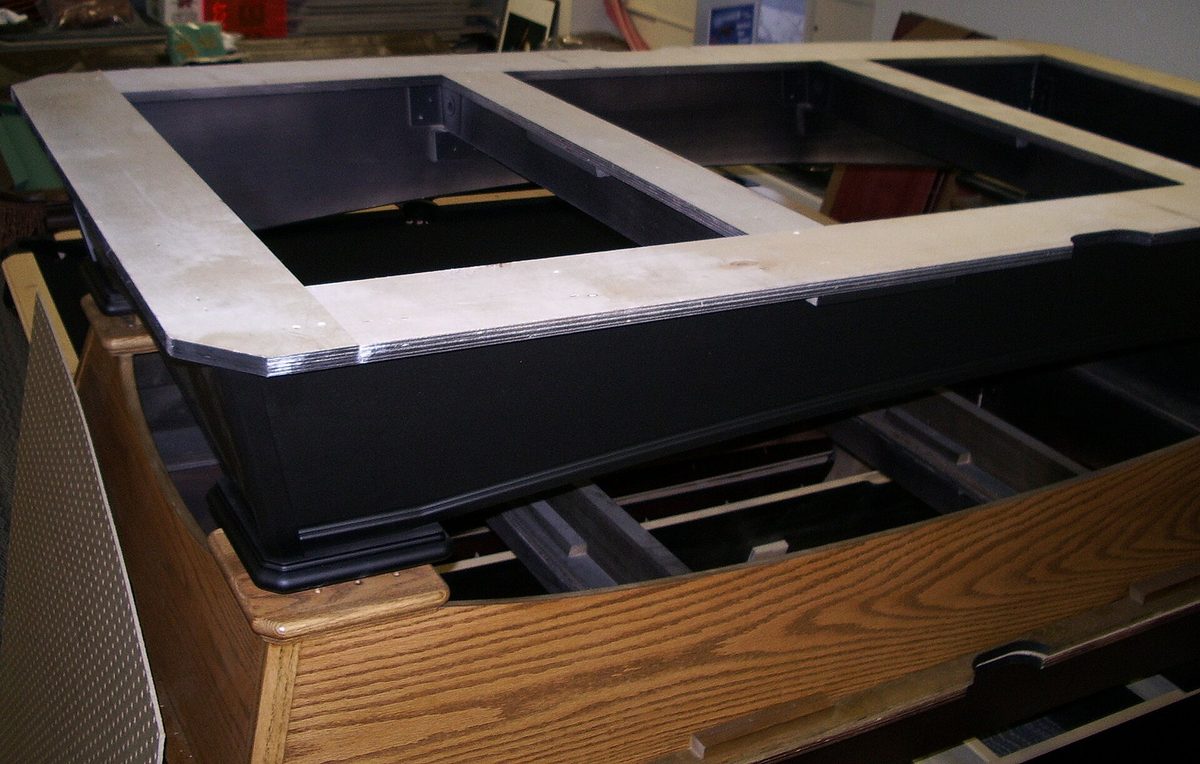
What the Top Actually Rests On
A dining conversion top does not float above the cloth. The surface normally rests on the outer rails or a dedicated support structure built into the table itself. The frame distributes weight around the playing area rather than pressing down on the bed. This matters for players who assume the top "protects" the playing surface. The same source warns that panels should not press directly against the billiard cloth because excessive pressure can affect the surface over time. The protection, if any, is incidental. The design priority is holding your dinner plates level, not preserving nap speed.
The Size Buyers Underestimate
An 8-foot dining conversion top is not a single piece of plywood you flip over with one hand. One model from Imperial measures 105 inches wide by 59.25 inches deep by 1.2 inches thick and weighs 132 pounds. An American Heritage top measures 105.25 inches by 61.25 inches by 2.50 inches thick, with a total weight of 158.4 pounds—roughly 40 pounds per panel. That top comes in four leaves, held in place by pins. Four leaves. Pins. This is furniture assembly, not a tablecloth.
The weight distribution matters for installation and removal. At 40 pounds per panel, one person can manage a section. Managing all four alone is a different proposition. The Imperial and GameRoomSpot listings do not specify where these panels live when the table is in play mode. Manufacturers assume you have a closet, a wall rack, or a very patient spouse. What no manufacturer publishes is where a panel of that size is supposed to live between dinners.
The Room Arithmetic Does Not Change
Cue clearance rules are relentless. Room minimums are measured with clearance on every side of the playfield. Their formula is straightforward: minimum room length equals playfield length plus ten feet, minimum room width equals playfield width plus ten feet. For a standard 58-inch cue, an 8-foot table needs roughly 13 feet 6 inches by 17 feet.
The same rule is also written as playing surface plus two times cue length, which works out to about 58 inches of clearance from every rail edge to the nearest wall, furniture, or obstacle. The World Pool-Billiard Association confirms the math: minimum room dimensions equal table dimensions plus twice the cue length, with 58 inches as the standard cue size.
The dining top sits within that footprint. It does not shrink it. Switching to a 52-inch cue saves six inches of clearance per side—a genuine space saver. Removing the dining top saves zero. The furniture changes. The geometry does not.
Pressure and Cloth Wear Over Time
No manufacturer publishes a figure for cloth degradation from repeated dining-top installation. The warning is a general one: sustained pressure can affect the surface over time. What "excessive" means in pound-force per square inch, or how many install-remove cycles before measurable nap compression, is not stated. The retailer frames the risk as avoidable through proper frame design—weight distributed to the rails, not the bed. Whether owners consistently achieve this alignment, or whether slippage and leaning panels accelerate wear, remains unverified.
The absence of hard data here is worth noting. Pool cloth is a wear item. Dining tops are a niche accessory. The intersection—long-term studies of pool cloth under seasonal leaf installation—does not appear to exist in the sourced material. Buyers weighing a conversion top against a dedicated table should know the risk is acknowledged but unquantified.
The Separate Category: Purpose-Built Conversion Tables
Two different products are sold under the same idea: a dining top added to a real pool table, and a purpose-built dual-use table. The latter category exists but lacks sourced specifications. No manufacturer or standards body is cited for playing-surface dimensions on conversion tables versus true pool tables. The distinction matters because a purpose-built unit may compromise playing dimensions to accommodate dining proportions, or vice versa. How much smaller the playing surface becomes depends on the model, and so does whether the slate, the rail response and the pocket geometry hold up: those are questions to put to the table in front of you, not to the category.
The difference is plain: a real pool table with a dining top preserves full playing specifications underneath. The conversion table does not advertise equivalent specifications. The tradeoff is space efficiency versus play integrity.
The Tradeoff in Plain Terms
A dining conversion top solves a surface problem, not a space problem. You gain a dinner table where a pool table stood. You lose wall space or closet volume to store four panels weighing 130-plus pounds. You retain the full room requirement: 13'6" by 17 feet for an 8-footer with standard cues and 58 inches of clearance on every side. The cloth faces pressure risk during every conversion. The alternative, a purpose-built dining-and-pool table, moves the compromise into the table itself: there is nothing to store, and the playing surface is chosen to live under plates.
The decision between top and conversion table hinges on which compromise you prefer: storing heavy furniture or playing on potentially diminished specifications. Neither choice changes the room you need to play pool properly.