Journal › Table Lab › Pool Table Slate Thickness: What the Extra Quarter-Inch Actually Buys
Table LabPool Table Slate Thickness: What the Extra Quarter-Inch Actually Buys
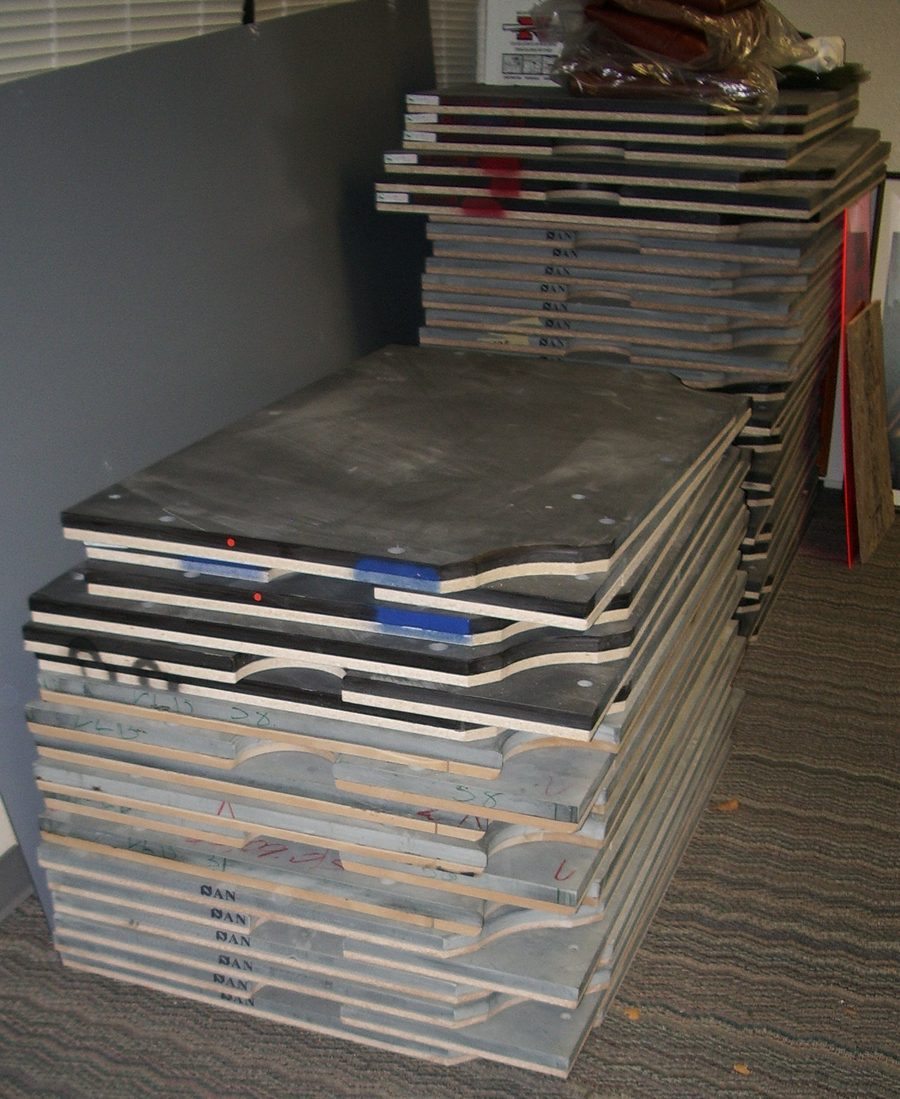
Slate is a fine-grained metamorphic rock, machined flat and framed underneath with at least three-quarters of an inch of wood. The WPA specification details tolerances: overall flatness, deflection under a 200-pound load centred on the bed (no more than 0.030 inches), and seam alignment within five thousandths of an inch after shimming. The rock itself does not care about your break shot. It cares about gravity, humidity, and the span between frame supports.
Thickness Resists Sag, Not Physics
A ball rolls true on any properly levelled surface. The question is how long that surface stays levelled. Thicker slate resists deflection between the points where the frame holds it, and it holds its machined flatness against years of play, climate swings, and the slow settlement of whatever floor the table sits on.
The WPA tolerance for deflection under load—0.030 inches under 200 pounds at centre—is a structural test, not a playability one. A thinner slate on a strong, well-spaced frame may pass. A thick slate on a weak frame may not. What the extra quarter-inch buys is insurance: more margin against frame imperfections, more resistance to the micro-movements that throw seams out of plane, and less sensitivity to the inevitable imperfections in how the table was installed.
Seybert's, a billiards retailer, notes that one-inch slate has become the standard for quality home tables because it resists deflection between supports and maintains flatness over time. The phrasing is deliberate. The benefit is longevity and stability, not some immediate upgrade in how the balls behave.
Why Tournament Tables Come in Three Pieces
The WPA allows single-piece slate for home tables but requires three equal-sized pieces for tournament use. The reason is practical, not mystical. Three pieces can be levelled independently at the seams, shimmed until the joints sit in the same plane within that 0.005-inch tolerance, then dressed until a ball cannot find them.
Single-piece slate is simpler. It ships flat, installs as one unit, and avoids the seam entirely. But it is heavy, brittle, and unforgiving of floors that are not already level. The three-piece design accepts real-world conditions: uneven concrete, settled joists, the slight warp of age. An installer can lift a corner, slide a shim, and true the surface. With one piece, you are at the mercy of what the floor already is.
LeaguePool, a pool equipment guide, puts it directly: three-piece slate lets an installer level each section independently, then dress the seams until play is seamless. The WPA specification adds the hardware detail—countersunk screws, wooden frame, three-quarter-inch minimum framing thickness—because the assembly matters as much as the rock.
The Thicknesses Actually on the Market
Retail spec sheets show four thicknesses in circulation. Three-quarter-inch, seven-eighths-inch and one-inch are the common options. Metric spec sheets show 45 mm and 50 mm products pitched for match tables, with flatness claims attached. The metric sizes roughly translate—45 mm is about 1.77 inches, 50 mm is about 1.97 inches—though these are specialty products, not standard consumer fare.
LeaguePool breaks the inches down by tier: three-quarter-inch as an acceptable minimum on entry-level slate tables, seven-eighths-inch as a middle ground, and one-inch as the gold standard for home tables and the tournament specification. The gradation is about frame compatibility and long-term flatness, not a ladder of immediate play quality.
A buyer comparing two tables sees these numbers and assumes bigger is better. The assumption is half-right. Thicker slate is more forgiving of frame weaknesses and more resistant to the slow deformation of years. But a three-quarter-inch slab on a robust frame, properly installed, plays indistinguishably from a one-inch slab on day one. The difference emerges in year five, year ten, when the thinner slate has sagged slightly at mid-span or the seams have crept out of plane.
What the Spec Sheets Mean in Practice
The WPA specifications are minimums, not guarantees. A table can carry one-inch slate and still fail the flatness test if the frame is warped or the installation was rushed. The tolerances—lengthwise flatness within 0.020 inches, widthwise within 0.010 inches, seams within 0.005 inches—are the numbers that actually matter. Most manufacturers do not publish these. They publish "1 inch slate" and trust the buyer to assume equivalence.
The deflection limit is particularly telling. A 200-pound concentrated load simulates the kind of stress a table sees: players leaning, balls struck hard, the accumulated weight of years. Slate that stays within 0.030 inches under that load will stay level under normal play. Slate that does not will develop subtle rolls, dead spots, seams that catch the ball.
Seybert's notes that thicker slate is said to resist deflection between frame supports. The hedging—"is said to"—is fair. The physics are straightforward: thicker beam, less deflection. But the frame quality and the installation matter as much or more. A thick slab poorly supported will sag. A thin slab well supported will not.
Shopping Without Getting Fooled
Start with the slate count. One-piece or three-piece is a binary that matters more than thickness for tables that will move or sit on imperfect floors. Three-piece is harder to install well but easier to fix. One-piece is simpler until it is not.
Then ask about the frame. The WPA specification requires three-quarter-inch wooden framing minimum, countersunk hardware, three equal slate sections. Many consumer tables omit these details from their listings. A seller who cannot confirm the frame thickness or the slate joint specification is selling mystery, not engineering.
Thickness claims are easier to verify. A one-inch specification is verifiable with a tape measure at the pocket cutout, where the slate edge is visible. What you cannot verify at purchase—flatness tolerance, deflection under load, seam alignment—are the qualities the WPA wrote specifications for. The absence of published tolerances in a product listing is not a red flag; it is the default. But a seller who cites WPA compliance and can explain what those tolerances mean has actually read the document.
The metric thicknesses—45 mm, 50 mm—appear mainly on tables pitched for serious amateur play or lower-tier professional events. These are overbuilt by American standards, with weight and transport complexity to match. They are not necessarily better; they are different trade-offs between stability and practicality.
The final consideration is what the table sits on. Slate does not float. It rests on a frame, which rests on legs, which rest on a floor. The WPA flatness tolerances assume a level foundation. A one-inch slate table on a sagging second-story floor will not stay within spec. A three-quarter-inch table on a concrete slab with adjustable leg levellers might.
The Real Value of the Extra Quarter-Inch
The WPA Recommended Equipment Specifications specify numbers, not adjectives. One inch minimum. Flatness to twenty thousandths. Seams to five thousandths. Deflection to thirty thousandths under load. These are the tolerances that define tournament play, and they are the tolerances that define whether a home table becomes a fixture or a frustration.
Thickness buys margin. The one-inch slate has more material to absorb the imperfections of frames, installers, and time. It is not a performance upgrade in the way a faster processor or a better lens would be. It is durability insurance, a hedge against the slow drift of physical things.
A buyer comparing three-quarter-inch and one-inch tables should ask not which rolls truer today, but which stays level through the seasons of use that follow. The WPA wrote its specifications for tables that must perform under tournament conditions, moved, reassembled, and played hard. Home tables face gentler use but often sloppier installation. The extra quarter-inch is forgiveness for the realities of living rooms and basement rec spaces, not a magic bullet for ball roll.